













Turnkey Water & Wastewater Infrastructure: What ‘Turnkey’ Actually Means
“Turnkey” is one of the most common words in water and wastewater infrastructure, and one of the least defined. Plenty of firms use it to describe very different scopes of work, which makes it a hard word to shop by. For a municipality, developer, or facility manager comparing providers, it’s worth knowing exactly what the word should mean before using it to evaluate anyone.
So it’s worth answering plainly: What does turnkey actually mean in water and wastewater infrastructure, and what should a client expect it to include?
The Real Definition
Turnkey, at its core, means a single provider carries a project from concept through operation: the client can, in theory, “turn the key” and the system works, without having to coordinate a patchwork of separate contractors, vendors, and consultants along the way. That’s a meaningful commitment. It means one accountable team, not a relay race where responsibility gets handed off at every stage.
In practice, a genuinely turnkey water or wastewater project should include, at minimum:
Planning and feasibility. Before any design work starts, a turnkey provider should be running site assessments, capacity studies, and regulatory scoping. The idea is to figure out what the site actually needs and what’s realistic given local requirements, not just taking an order for equipment.
Design and engineering. The system has to be engineered for the specific site: flow rates, effluent requirements, footprint constraints, and future growth, not adapted after the fact from a generic template.
Permitting. Securing environmental and regulatory approvals—state discharge permits, local health department sign-off, sometimes federal requirements—is a distinct discipline from engineering, and it’s a step that’s easy to underestimate. A provider that manages this in-house, rather than routing it through the client or a separate consultant, keeps the project on one accountable timeline instead of several.
Procurement and fabrication. Sourcing or manufacturing the actual treatment equipment—membranes, aeration systems, tanks, controls—ideally through relationships or in-house capability the provider controls directly, rather than reselling whatever’s available.
Construction and installation. Getting the system physically built and connected on-site, coordinated by the same team that designed it, so design intent doesn’t get lost in translation to a separate contractor.
Commissioning, startup, and training. Testing the system, bringing it into full operation, and training the staff who’ll run it day to day, the step that turns a completed installation into a working plant.
Ongoing support. Not every provider includes this under the turnkey umbrella, and terms vary, but it’s worth asking about directly, since a plant’s real performance is measured over years, not at the ribbon-cutting. Understanding what’s included after startup, and what’s billed separately, should be part of any turnkey conversation.
A provider that owns all or most of that chain is turnkey in the meaningful sense. A provider that owns one or two pieces—say, equipment supply and installation—while outsourcing permitting, design, or long-term support isn’t wrong to use the word loosely, but it’s not offering the same thing, and the gap tends to show up as delay, cost overrun, or compliance risk somewhere in the middle of the project.
Why the Gap Matters
The practical risk of a not-quite-turnkey provider isn’t that the equipment fails. It’s coordination failure, the permitting consultant’s timeline doesn’t match the construction schedule, the equipment vendor’s specs don’t quite match what the site engineer assumed, and the client ends up as the de facto general contractor for a project they thought they’d handed off.
That’s a lot of hidden project management labor sitting behind a word that was supposed to mean “you don’t have to do that.”
For municipalities, developers, school districts, and industrial operators evaluating water and wastewater infrastructure providers, the useful question isn’t “do you call yourselves turnkey?” It’s “which parts of this project will your team directly own, and which parts will I need to manage myself or hire someone else for?” The answer tells you more than the label does.
How IWS Delivers Turnkey Water and Wastewater Projects
Integrated Water Services was founded in 2003 and has operated as a turnkey water and wastewater provider across North America for more than two decades, with the stated position of being a leading provider of turnkey water, wastewater, and recycle/reuse systems across municipal, residential, commercial, and industrial markets. In practice, that means IWS stays engaged through planning, design, permitting, construction, and commissioning as a single accountable team, the stages of a project where coordination gaps most often show up when they’re split across multiple vendors.
Two recent moves reflect that same philosophy applied to the supply side of the business. The 2024 acquisition of Hi-Line Industries brought custom equipment fabrication—including advanced 3D CAD/CAM design and manufacturing—in-house rather than sourced through a third-party vendor.
The more recent acquisition of Complete Filtration Resources extended that in-house capability into process filtration and industrial wastewater treatment, adding specialized expertise in sectors like dairy and food & beverage processing. Both acquisitions were framed explicitly around strengthening turnkey delivery — bringing more of the project lifecycle under direct control instead of outsourcing it.
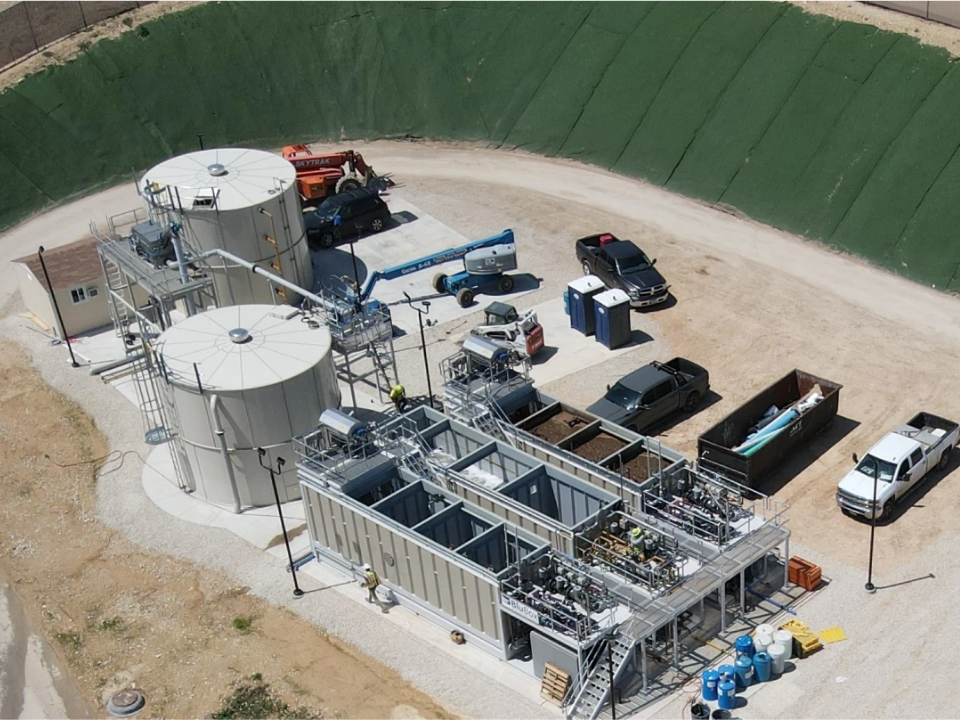
On the technology side, IWS offers more than one platform depending on what a site actually needs: permanent concrete modular systems (NXT|MBR) built for long-term, high-volume performance, and BluBox modular membrane bioreactor units built for rapid deployment in disaster response, short-term projects, or interim operations.
That range matters for a turnkey claim to mean something, a provider locked into a single product type isn’t matching technology to the site, they’re matching the site to their product.
The Bottom Line
“Turnkey” should mean a client can hand off a water or wastewater infrastructure project, from the first feasibility question to a fully operating, permitted, staffed system, to one accountable team.
That’s a high bar, and it’s worth treating any provider’s claim to it as a starting question rather than a settled fact: ask specifically which stages of the project they own directly, and which ones you’d still need to coordinate yourself.
If you’re evaluating turnkey water or wastewater infrastructure providers, talk to IWS’s team about what a fully accountable, single-team project would look like for your site.