













What to Look for in a Decentralized Wastewater Treatment Partner
A Framework for Evaluating Companies That Design and Install Decentralized Wastewater Systems
You’ve already made the call: your site is going decentralized. Maybe the municipal sewer line is years away, maybe it’s not coming at all, or maybe a satellite plant is simply the smarter, faster path to breaking ground. That decision is behind you. The one still in front of you is bigger than it looks.
With a municipal hookup, the utility carries the long-term risk. You connect, you pay a bill, and someone else operates and maintains the system that treats your wastewater. A decentralized system doesn’t work that way. The plant lives on your site, under your name, for decades. There’s no utility backstop if something goes wrong at year twelve. The team you hire to design and install it is the partner whose decisions you’ll be living with for the life of the facility.
That makes the vetting process different from a typical procurement. Price and turnaround time still matter, but they’re not the whole story. Here’s what actually separates a partner worth betting decades on from one that leaves you exposed.
Capability #1: Do They Design, Build, and Support… or Just Sell Equipment?
This is the question underneath every other question on this list, and it’s worth asking plainly: Are you looking at companies that design and install decentralized wastewater systems, or a manufacturer that ships equipment and lets someone else handle integration?
The difference shows up years down the road, not at signing. An equipment-only vendor sells you a membrane package and moves on; if the civil work, the controls, or the permitting doesn’t line up with the equipment, that’s your problem to coordinate, usually through a general contractor who wasn’t part of the original design conversation. A full-service partner—one engaged in planning, design, permitting, construction, and commissioning under a single team—carries accountability the whole way through, because the engineer who sized the system also has to stand behind the construction and support the facility after startup.
That continuity matters most when something needs to change mid-project. If a permit condition shifts the discharge limit, or Phase 2 build-out changes your flow assumptions, a single accountable team can adjust the design without a finger-pointing exercise between three different vendors.
Capability #2: Permitting and Regulatory Experience
This is the hidden bottleneck on almost every decentralized project. Municipal tie-ins move through a relatively standardized approval process. Onsite and decentralized systems don’t; they typically require navigating state environmental agencies, local health departments, and sometimes federal discharge requirements simultaneously, and the process varies significantly by jurisdiction.
Ask a prospective partner directly: what permits have they secured in your region, and with which agencies? A firm that regularly identifies which permits a project needs—general discharge permits, industrial wastewater permits, water quality management plans—and manages that process end-to-end with the relevant agencies is a very different proposition than one that treats permitting as a subcontracted afterthought.
Regulatory relationships and a track record with your specific state agency can be the difference between a six-month approval and an eighteen-month one.
Capability #3: Can They Match the Technology to the Site?
A good partner doesn’t walk in with one product and a reason it fits everything. Decentralized treatment covers a wide range of situations: a rural subdivision with 50 homes, a phased master-planned community that will 4x its flow over ten years, an industrial site with variable process water. Those don’t call for the same system.
Ask how they approach technology selection. Do they assess flow rate, effluent requirements, site constraints, and future capacity before recommending a system, or do they lead with the product? Packaged plants, modular MBR systems, and permanent concrete infrastructure all solve different problems: a palletized modular unit sized for a small rural community and shipped in weeks is a different tool than a permanent, expandable concrete system built for a community that expects to grow substantially over decades. A partner with more than one platform in their lineup, and a real process for matching platform to site, is more likely to size the system to your actual problem instead of their catalog.
Capability #4: What Does Their Site Assessment and Planning Process Look Like?
Before a single design drawing gets made, ask what their upfront process actually involves. A serious partner starts with site assessments, feasibility studies, and environmental impact analysis, not a quick site visit and a proposal.
The bigger question is how far out they’re planning. If your project is a subdivision, a campus, or an industrial site that expects to grow, ask how the system accommodates that. Does the design anticipate that Phase 1 flow numbers won’t be Phase 3 flow numbers?
A partner who understands how permit timelines interact with construction sequencing, and who builds in modular or expandable capacity from the start, saves you from a replacement problem five or ten years in, sizing only for today’s demand is one of the most common and expensive mistakes on decentralized projects.
Capability #5: What Happens After Installation?
Commissioning day isn’t the finish line, it’s closer to the starting line for a system that needs to run reliably for decades with no utility to call if something goes wrong.
Ask specifically what’s included after startup versus what’s billed separately: routine monitoring, maintenance support, emergency response, remote diagnostics. Some partners build automation and remote monitoring into the system itself, so a facility manager or HOA board doesn’t need a certified operator on-site every day to stay in compliance; oversight can happen from a phone or laptop, with the partner’s team reachable when something needs attention. Others treat post-commissioning support as a separate contract you’ll need to negotiate later, after your leverage has dropped. Get this in writing before you sign, not after.
Emerging Trends Worth Asking About
Two capabilities increasingly separate forward-looking partners from the rest of the field, and they’re worth raising even if they’re not top of mind yet:
Water reuse and reclamation. If your jurisdiction requires (or might eventually require) treated effluent to meet reuse standards for irrigation or subsurface dispersal, ask whether the system can be configured for that from day one. Retrofitting reuse capability into a plant that wasn’t designed for it is far more expensive than designing for it up front.
Digital and remote monitoring. Modern decentralized systems increasingly include SCADA integration and remote diagnostics as standard, not optional. Ask whether monitoring and control are built in-house or bolted on through a third party; that distinction affects both reliability and how quickly issues get resolved.
Quick Checklist: Questions to Ask a Prospective Partner
- Do you handle design, permitting, construction, and commissioning yourselves, or is this a multi-vendor arrangement?
- What permits have you secured in our state or county, and with which agencies?
- How do you decide which treatment technology fits a given site, and what alternatives did you rule out for projects like ours?
- What does your site assessment process include, and how do you plan for capacity beyond current demand?
- What’s included in post-commissioning support, and what’s billed separately?
- Can you provide references from projects of similar size and site conditions to ours?
Where IWS Fits
Integrated Water Services is a design-build firm that stays engaged across the full project lifecycle—planning, design, permitting, construction, and commissioning—rather than handing off pieces to separate vendors. Permitting is handled in-house, including the discharge and compliance permits (NPDES and related state and local requirements) that tend to slow decentralized projects down.
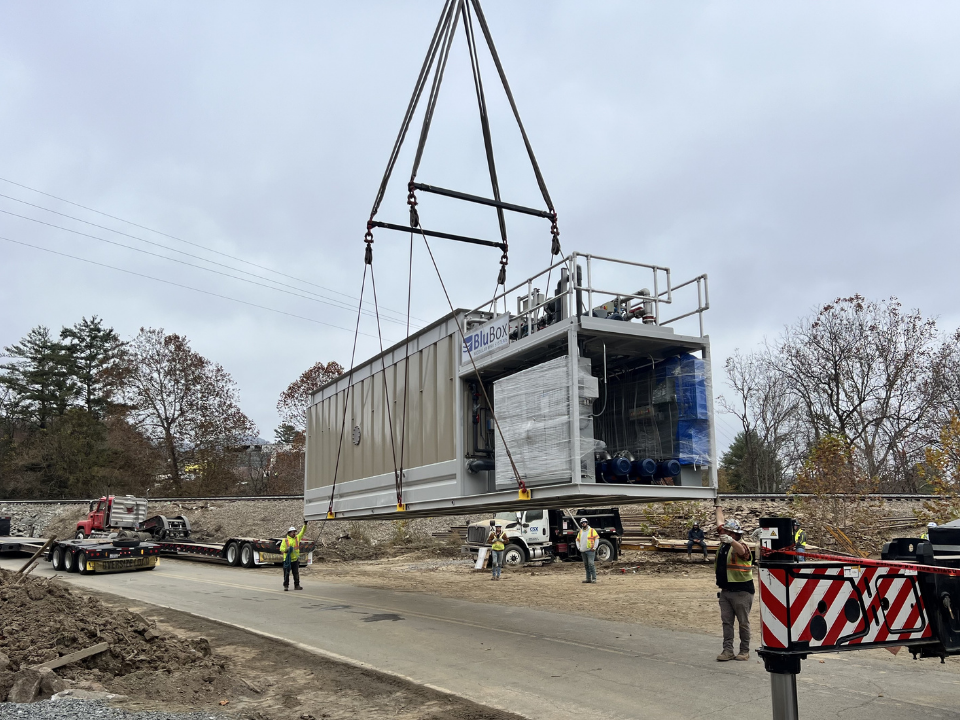
On the technology side, IWS offers more than one platform, from palletized modular systems sized for smaller or phased projects to permanent concrete modular infrastructure built for long-term, expandable capacity, matched to the site rather than sold as a single default.
If you’re vetting partners for a decentralized system, those are the questions worth asking anyone you’re considering, IWS included.