
















Decentralized Wastewater Infrastructure for Where Growth Actually Occurs
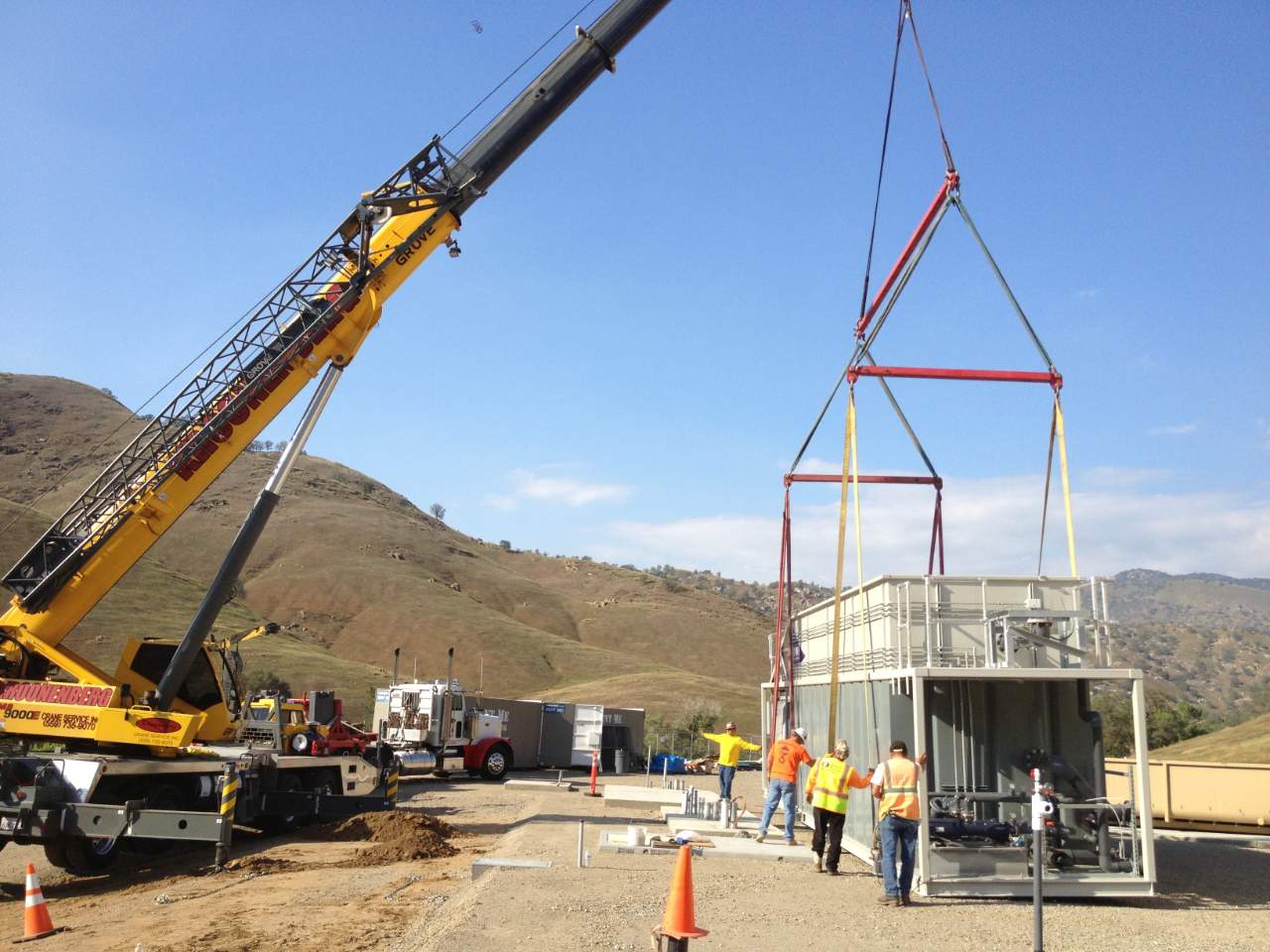
Growth rarely happens where infrastructure already exists.
Across the U.S., new residential developments, logistics hubs, data centers, and mixed-use corridors are expanding outward, often well beyond the reach of existing interceptor systems. Extending centralized wastewater infrastructure to serve these areas can take years, require significant capital investment, and introduce permitting complexity that slows development timelines.
In response, utilities and private infrastructure owners are turning to a different model: Satellite wastewater treatment plants.
These systems are not temporary fixes or stopgaps. Increasingly, they are permanent components of regional wastewater strategies designed to serve specific geographies with the same reliability, compliance performance, and operational discipline as large centralized facilities.
Designing them correctly requires a different way of thinking.
The Shift Toward Decentralized Treatment
Traditional wastewater planning has been built around centralization. Large plants collect and treat flows from broad service areas, supported by extensive conveyance networks designed to move wastewater efficiently across long distances.
That model begins to break down at the edge of growth.
New developments may sit miles from the nearest trunk sewer. Topography, environmental constraints, or right-of-way limitations can make gravity conveyance impractical. In fast-moving markets, the timeline required to extend centralized infrastructure simply doesn’t align with development schedules.
Satellite plants solve for these realities.
Instead of moving wastewater long distances, treatment capacity is brought closer to the point of generation. Systems are designed to serve a defined service area, whether that’s a residential subdivision, an industrial park, or a standalone institutional campus.
For utilities, this approach can reduce conveyance costs, limit inflow and infiltration exposure, and create more flexible infrastructure networks. For private developers and utilities, it allows projects to move forward without waiting on regional infrastructure expansions.
But decentralization introduces its own set of design challenges.
Siting Constraints Drive Design Decisions
Satellite treatment plants are rarely built on ideal sites.
They are often located within or adjacent to developed areas, where available land is limited and community expectations are higher. Odor control, visual impact, and noise become more important considerations. Setbacks, zoning restrictions, and environmental permitting can further constrain layout options.
In these environments, footprint matters.
Conventional treatment processes, particularly those that rely on large clarifiers and multiple basin stages, can require more space than is available or economically viable. Site grading, excavation, and structural costs can escalate quickly when trying to fit traditional designs into constrained parcels.
Compact treatment solutions offer a different path.
Systems that can operate at higher biomass concentrations and reduce the need for large settling basins allow designers to shrink the overall plant footprint. This creates more flexibility in site layout and can make projects feasible on parcels that would otherwise be unsuitable for wastewater treatment.
Siting is no longer just a civil design exercise. It is a core driver of process selection.
Designing for Scalability from Day One
One of the defining characteristics of satellite plants is that they are rarely built to their ultimate capacity on day one.
A new development may begin with a few hundred residential connections, with plans to expand to several thousand over time. Industrial sites may phase in production capacity over multiple years. Community-scale systems may grow as adjacent parcels are developed.
Designing for this growth requires a clear strategy.
Plants must be able to scale in defined increments without requiring major reconstruction of core infrastructure. This means establishing a layout that supports future expansion (hydraulically, structurally, and operationally).
Key considerations include:
- Reserving space for additional treatment trains or membrane modules
- Designing equalization and headworks systems that can accommodate future flows
- Ensuring electrical and control systems can scale without complete replacement
- Planning piping and hydraulics to support phased expansion without disruption
The goal is to align capital investment with actual growth.
Overbuilding a facility too early ties up capital and increases operational complexity. Underbuilding without a clear expansion path creates bottlenecks that can delay development or trigger costly retrofits.
A well-designed satellite plant strikes a balance: right-sized for today, structured for tomorrow.
Operator Realities in Decentralized Systems
Designing the process is only part of the equation.
Satellite plants are often operated under very different conditions than centralized facilities.
A large municipal plant may have a full-time operations staff, dedicated maintenance personnel, and on-site laboratory capabilities. A satellite facility may be one of several plants managed by a small team, with operators rotating between sites or overseeing operations remotely.
This changes how systems need to function.
Processes must be stable across a wide range of operating conditions. Controls must be intuitive and responsive. Instrumentation must provide clear visibility into system performance without requiring constant manual oversight.
Automation becomes essential.
Modern satellite plants rely on integrated control systems that monitor key process variables, like dissolved oxygen, ammonia, flow rates, membrane performance, and adjust operations accordingly. Remote access allows operators to respond quickly to changing conditions without being physically present at the site.
At the same time, systems must be designed for maintainability.
Equipment access, redundancy, and serviceability all influence long-term operational success. Membrane systems, pumps, and blowers must be accessible for inspection and maintenance without requiring extensive downtime or specialized equipment.
In decentralized networks, the most successful facilities are the most predictable and manageable.
Why Compact Systems Matter
All of these factors, such as site constraints, phased growth, operator availability, point toward the same conclusion: Compact, high-performance treatment systems are increasingly well suited to satellite applications.
Technologies that allow higher biomass concentrations, eliminate large settling basins, and produce consistent effluent quality in smaller footprints provide clear advantages in decentralized environments.
Membrane bioreactor systems are one example of this shift.
By replacing clarifiers with membrane filtration, MBR systems reduce the footprint required for solids separation and allow treatment to occur at higher mixed liquor concentrations. This supports smaller reactor volumes and more flexible layouts.
Just as important, membrane separation provides stable effluent quality independent of settling performance. In satellite systems where flows can vary and operational oversight may be distributed, this stability becomes a significant advantage.
Compact systems also support modular expansion.
Additional capacity can be added by increasing membrane surface area or bringing additional treatment trains online, allowing plants to grow in step with the communities they serve.
A Different Model for Wastewater Infrastructure
Satellite wastewater treatment plants represent a shift in how infrastructure is planned and deployed.
Instead of a single centralized facility serving an entire region, utilities and private operators are building networks of smaller, strategically located plants. These systems provide flexibility, reduce dependence on long conveyance networks, and allow infrastructure to keep pace with development.
But this model only works when the underlying treatment systems are designed to support it.
Facilities must be compact enough to fit constrained sites, scalable enough to grow with demand, and reliable enough to operate with limited on-site staffing. They must deliver consistent performance under variable conditions and integrate seamlessly into broader utility networks.
Designing for these realities requires a clear understanding of both process technology and infrastructure strategy. For growing communities, satellite treatment is part of the foundation.